

There are books we remember because they were genuinely great, and then there are books we remember because we were a completely different person when we read them.
Christopher Pike’s The Midnight Club falls into the second category for me.
I first read it as a teenager, back when a book about terminally ill teens gathering at midnight to tell frightening stories felt genuinely unsettling. Decades later, I found myself listening to the audiobook as part of a reading challenge and wondering what would happen when adult Lacey met teenage Lacey’s favorite books.
What happens when you return to a book that helped shape your reading life?
The answer was a little nostalgic, a little surprising, and occasionally a lot more skeptical.
So, does The Midnight Club still hold up? Sort of. But revisiting it reminded me that rereading isn’t always about rediscovering a favorite book. Sometimes it’s about discovering the reader you used to be.
*Spoilers will be hidden and labelled so you can choose to read or skip.
This post may contain affiliate links. If you click on them and make a purchase, I may earn a small commission at no extra cost to you. As an Amazon Associate I earn from qualifying purchases.
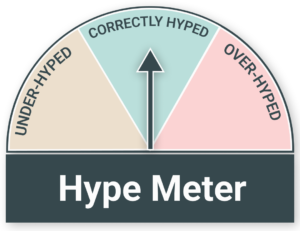
Hype Meter
Goodreads: 3.51 | StoryGraph: 3.35
Near Correctly-hyped.
Cover Crit
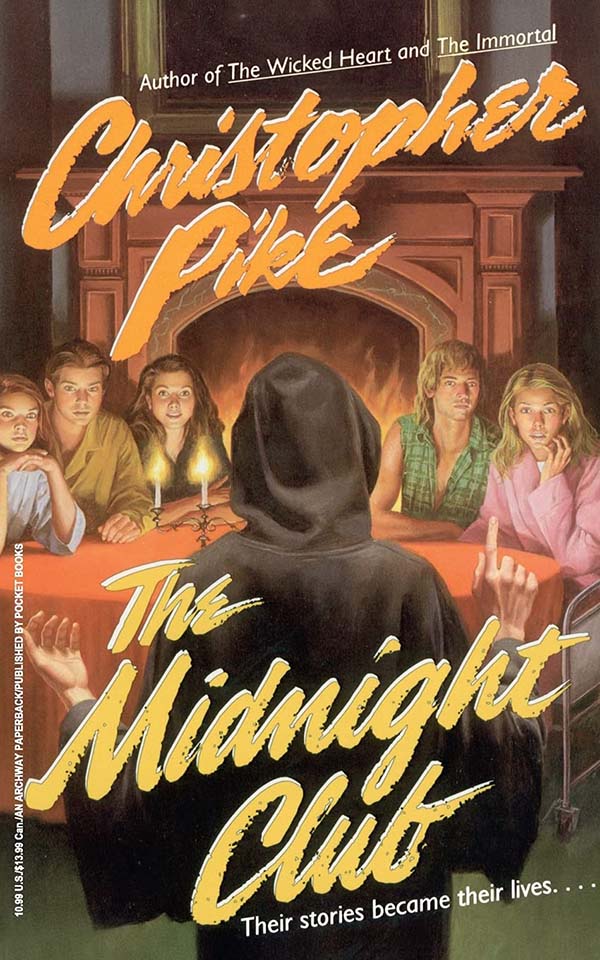
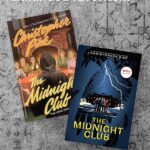
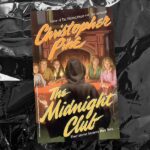
When I was a teenager, I read The Midnight Club. The original cover must have spoken to me in some way. Now it just hits as nostalgic. The book has recently become a Netflix series, and the new cover is a tie-in with the show’s branding. For this review I am mostly focusing on the original cover.
Looking back on the old cover, it is a little disappointing that all of the teens in this book are white. There was a lot of opportunity to make the cast more diverse; they aren’t really described in a lot of detail in the story.
It is nice that the cover artist included the wheelchair that one of the characters uses, but the wheelchair itself is super old-school. I notice that in the new tie-in cover, all five of the main characters are standing. That is disappointing from a diversity and an accuracy standpoint.
Color Story
The orange, yellow, and black predominantly on the cover of The Midnight Club give the cover a “Halloween,” spooky vibe.
Typography Notes
The typography builds on the spooky elements, staying true to the whole Christopher Pike teen-thriller/horror niche. The treatment of his name and the book title is fairly consistent across his oeuvre. This is fairly common for popular mass-market paperbacks, especially during the 1990s when The Midnight Club was first released.
Genre Signals
As noted, the color scheme and the type styling denote the genre. The illustration goes even further by showcasing a group of semi-frightened-looking teens listening to a black-robed speaker (presumably Death). Firelight and candle flames enhance the effect.
Hidden Details
One interesting detail on this cover is that the cloaked speaker is showing their hands. The left hand is open-palmed and showing all five fingers–there are five members of The Midnight Club. The right hand gestures with a single raised finger–the story reveals that one of the members of the club is not quite like the others.
Mood Check
The mood of the piece is intended to be spooky, but the dated delivery and teen audience prevent it from being all-out creepy. You’ll find that the story within The Midnight Club is similar.
Beyond the Dust Jacket
I actually listened to the audiobook of The Midnight Club this time around. Maybe someday I’ll track down vintage copies of my favorite old Pike tales. The audio read by Iman Benson is easy to listen to. The reader has a youthful voice that fits with the main character POV.
Did the design affect whether I bought the book?
Probably the first time around, but the second read was all nostalgia-based.
Story Snapshot
In Short
Five teens with terminal illnesses connect at midnight over shared stories.
From the Publisher
Now an original Netflix series!
From the author of The Wicked Heart and The Immortal comes a beautiful and haunting novel about a group of five terminally ill teenagers whose midnight stories become their reality.
Rotterham Home was a hospice for young people—a place where teenagers with terminal illnesses went to die. Nobody who checked in ever checked out. It was a place of pain and sorrow, but also, remarkably, a place of humor and adventure.
Every night at twelve, a group of young guys and girls at the hospice came together to tell stories. They called themselves the Midnight Club, and their stories could be true or false, inspiring or depressing, or somewhere in-between.
One night, in the middle of a particularly scary story, the teenagers make a secret pact with each other, which says, “The first one who dies will do whatever he or she can do to contact us from beyond the grave, to give us proof that there is life after death.”
Then one of them does die…
Characters I Followed Into Battle
Ilanka, Anya, Sandra, Kevin, and Spence are all terminally ill 17- 19-year-olds at a hospice in Northwest Washington. Unlike others at their facility, they skip group therapy sessions designed to help them accept their deaths, choosing instead to meet at midnight to tell stories.
Ilanka is the main point-of-view character. She believes her stories are remembered past lives.
Writing Style Notes
The voices and POVs are what you’d expect for characters this age. What sounded mature to me as a teen sounds youthful to me as an adult. It may have been that I listened to the book on audio rather than reading it, but I think there could have been more differentiation in the way the characters spoke, especially since they were not all from the same area.
The structure of the story follows a main character as she experiences her time in hospice, but allows other voices to shine through when they are in active storytelling mode.
Themes Living Rent-Free In My Head
Dealing with impending death as a teen.
What Landed For Me
What Worked:
- Sympathetic characters whom you care about even when their pain and grief cause them to act like jerks.
- Interesting stories that keep you engaged. It is easy to understand how this format would make for good TV.
What Didn’t Fully Click:
The premise was solid in the description, but as the story unfolds, it takes a turn away from the supernatural and never really veers back.
The Midnight Club skews more philosophical than spooky, so it may not meet the readers’ upfront expectations.
As a teen, I didn’t notice, but as an adult (much more jaded by living life), I felt like the doctor who took in all the kids could have become creepy real quick.
Overall:
It was interesting to revisit this as an adult, but not something I’d actively seek to read again.
Intentional Reading Reflection
I was excited to reread a childhood favorite when the prompt came up in my reading challenge. I had always intended to reread a Christopher Pike novel for this prompt; however, I wasn’t sure which one because I didn’t own any. So I let the library decide. They had The Midnight Club on audiobook, so I went with that.
I don’t often listen to audiobooks. I find that I have a hard time paying attention. However, the fact that this was a reread gave me the confidence that a little distraction wouldn’t make or break my experience of the book. Oddly, it took me a lot longer than expected to make it through the 5 1/2 ish hours of the book. Longer than it likely would have taken to eyeball-read it.
Either way, choices were made. I felt like listening to a book I had previously (very long ago) read was an interesting experiment. I remembered the story, so I wasn’t surprised by anything that happened, but it did still feel fresh, and I attribute that to the audio.
Ultimately, The Midnight Club was still a pretty decent teen read. If it were written today, I would expect it to be twice as long and much darker. While I was already familiar with the content, so I was not challenged per se, it was a fun experiment to compare my perceptions now against my memories of teen Lacey. I encourage you to give it a try with a book you remember reading as a kid or teen.
Cover Promise Rating
Did the cover make promises the story actually kept?
I’d say The Midnight Club is not as spooky as it leads the viewer to believe. Giving it a yellow light. Proceed with caution.

Final Verdict
Read if you like:
- Christopher Pike or R.L. Stein books from your childhood.
- Explorations of death and dying, grief and acceptance.
Skip if you dislike:
- Teen POVs – these are definitely youths
- Discussion of past lives, God, angels, devils, etc.
Reading Debris
I read The Midnight Club to fulfill the Playing Card Reading Challenge prompt: Reread a book from your childhood.
It could also fulfill:
Your Turn
What book from your childhood would you like to revisit? Do you think it would hold up to your expectations today?
May your life be as full as your bookshelf and as long as your TBR list.
Happy Reading!

Consider Life'd Deepest Questions. The Shallow Ones Too.
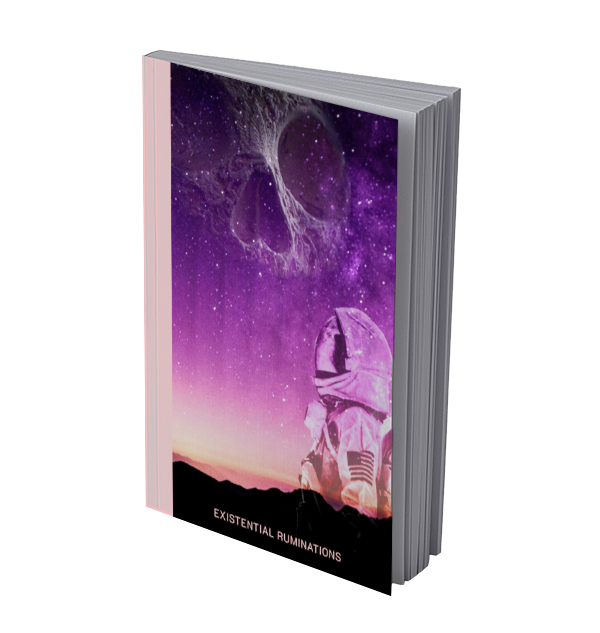
“Existential Ruminations” lined, 120-page, hardcover or paperback journal.
0 Comments