
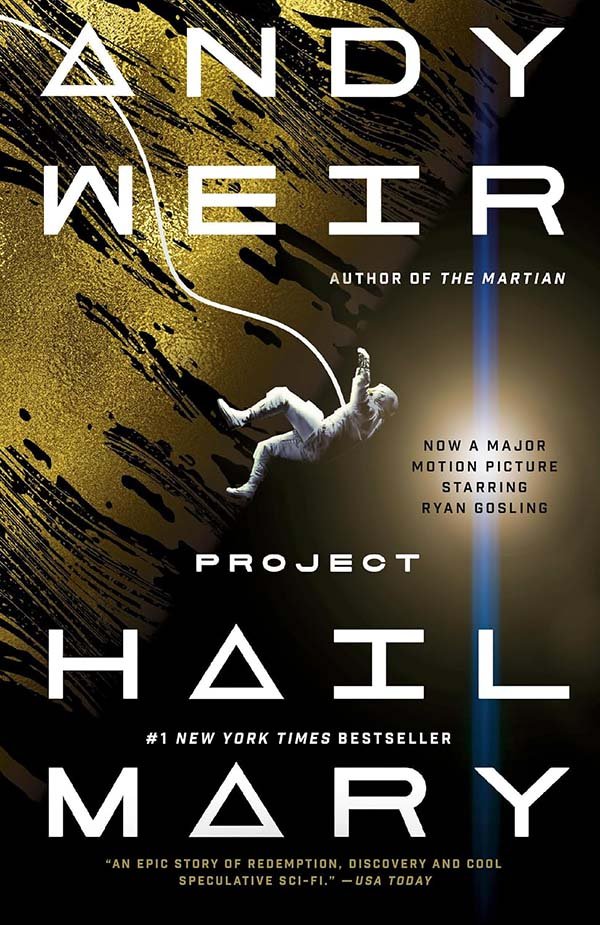

I went into Project Hail Mary with a problem: I had already heard that I was supposed to love it.
The book had been recommended by friends, talked about constantly online, and seemed to have acquired the kind of enthusiastic following that makes a reader wonder whether there is any point in resisting. Add a highly anticipated movie adaptation, and suddenly this was no longer just a book on my TBR. It was an Event.
And I tend to have complicated feelings about Events.
I like discovering what a book has to say to me, rather than measuring my experience against everyone else’s. But when the praise gets loud enough, it can be difficult to hear your own opinion underneath it.
So I finally picked up Project Hail Mary, partly because it fit my Playing Card Reading Challenge and partly because my daughter gave me the nudge I apparently needed.
Did I love it?
Not exactly.
Did I enjoy it?
Yes.
And that distinction turned out to be much more interesting than I expected.
*Spoilers will be hidden and labelled so you can choose to read or skip.
This post may contain affiliate links. If you click on them and make a purchase, I may earn a small commission at no extra cost to you. As an Amazon Associate I earn from qualifying purchases.
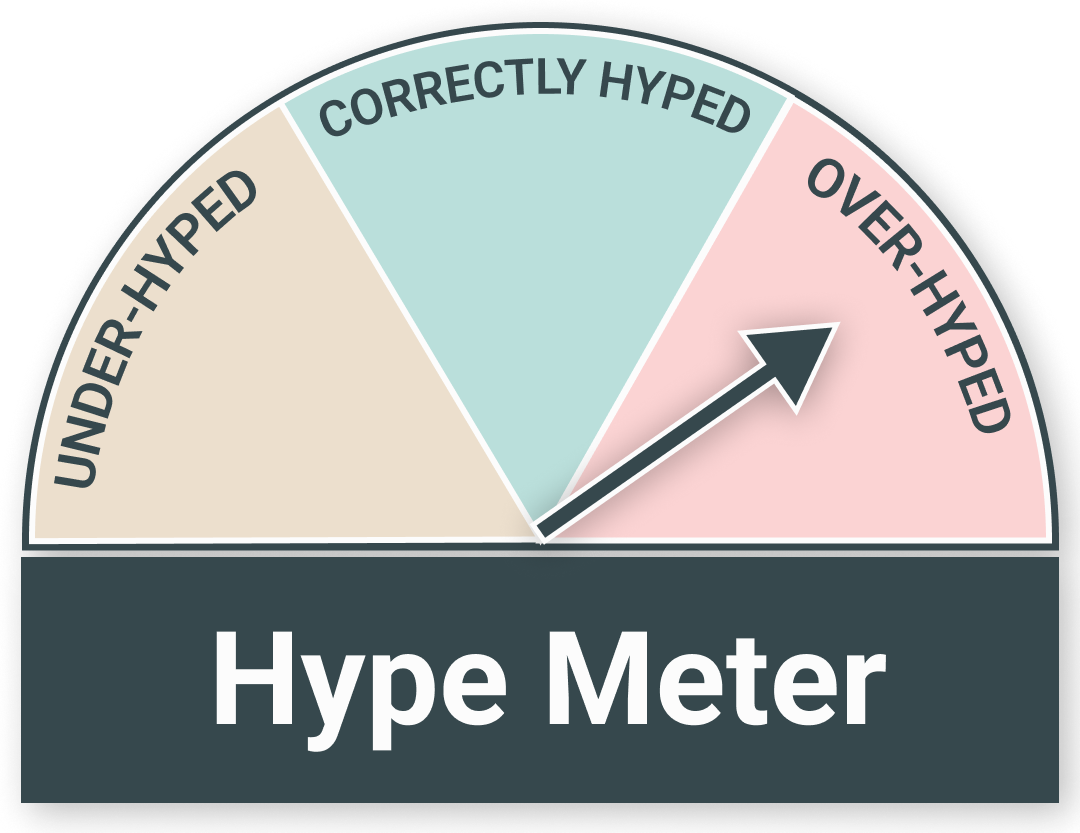
Hype Meter
Goodreads: 4.51 | StoryGraph: 4.5
My Take: Slightly Over-hyped
Cover Crit
The cover of Project Hail Mary successfully blends very structured lettering with dynamic imagery to create a sense of visual tension. This composition sets the tone for a thriller-like experience with undertones of bleak hopelessness.
Color Story
The stark back and white of the cover is made eerie by the addition of a muddled chartreuse tone that shimmers gold at intervals.
Typography Notes
The Project Hail Mary cover features an altered version of Cindie Mono, a geometric monospaced display typeface, with delta symbols ∆ (symbolizing a change in variable or the addition of heat in a chemical reaction) in place of the A character. This is a super fun way to merge scientific notation into a science fiction title.
The book interior is set in the typeface Albertina by Dutch calligrapher and designer Chris Brand and adapted to digital by Frank E. Blockland. (Note provided in the back of the book for type nerds everywhere).
Genre Signals
An astronaut on that cover is generally a good sign that we are looking at a science fiction set in space.
Hidden Details
None that I noticed.
Mood Check
Dark, isolated, thrilling.
Beyond the Dust Jacket
Chapter titles (“Chapter [#]” rather than named titles) are set in a cool, blocky, tech-ish font that reads very sci-fi-esque. There are also drop caps in the same font but just the outline. It looks nice and helps pull the design through the interior reading experience.
Great use of italics to designate translated speech and musical notes, which I don’t see a lot in print–fun!
Did the design affect whether I bought the book?
Not this time! Project Hail Mary lit up social media. First the book, then the movie adaptation. It was everywhere. I had previously read Artemis by Andy Weir and liked it a lot, and I enjoyed the movie made from The Martian. So this was less an “if I’ll read it” and more of a “when I’ll read it.”
Story Snapshot
In Short
An amnesiac astronaut awakens millions of miles from Earth with two dead crewmates. As memories return, he must solve a scientific mystery to save humanity from extinction.
From the Publisher
#1 NEW YORK TIMES BESTSELLER • Now a major motion picture starring Ryan Gosling, directed by Phil Lord and Christopher Miller, with a screenplay by Drew Goddard
A lone astronaut must save the earth from disaster in this “propulsive” (Entertainment Weekly), cinematic thriller full of suspense, humor, and fascinating science—from the author of The Martian.
HUGO AWARD FINALIST • NEW YORK TIMES READER PICK: 100 BEST BOOKS OF THE 21ST CENTURY • ONE OF THE YEAR’S BEST BOOKS: Parade, Newsweek, New York Public Library, Polygon, Shelf Awareness, She Reads, Kirkus Reviews, Library Journal
Ryland Grace is the sole survivor on a desperate, last-chance mission—and if he fails, humanity and the earth itself will perish.
Except that right now, he doesn’t know that. He can’t even remember his own name, let alone the nature of his assignment or how to complete it.
All he knows is that he’s been asleep for a very, very long time. And he’s just been awakened to find himself millions of miles from home, with nothing but two corpses for company.
His crewmates dead, his memories fuzzily returning, Ryland realizes that an impossible task now confronts him. Hurtling through space on this tiny ship, it’s up to him to puzzle out an impossible scientific mystery—and conquer an extinction-level threat to our species.
And with the clock ticking down and the nearest human being light-years away, he’s got to do it all alone.
Or does he?
Hailed by USA Today as “an epic story of redemption, discovery, and cool speculative sci-fi,” Project Hail Mary is an irresistible interstellar adventure as only Andy Weir could deliver.
Characters I Followed Into Battle
Dr. Ryland Grace proves to be endearing and likeable. You can see why people respect him as a scientist, but also look at him like he is just a regular guy. His naming conventions are so dad-joke-adjacent that they made me giggle on multiple occasions. He is curious about each new thing he encounters and waves judgement most of the time.
Rocky, well, I won’t get into that. I think it’s best to discover him along with Dr. Grace.
Eva Stratt is arguably the most interesting character in the whole book, and she barely gets any page time. I’d love to have a retelling from her perspective. She is the head of the task force entrusted by all of the world’s governments to assemble a team and save the planet. (Essentially Nick Fury, but for science rather than superheroes).
Writing Style Notes
There has been a ton of chatter about the level of scientific description within the pages of Project Hail Mary. I, for one, think that it was integral to the character development. That’s right, not the plot, the character. Ryland Grace is a grade-A science nerd. 90% of the book takes place in his head. Of course he is calculating things and working out problems in the most scientific way possible. If this were glazed over, he wouldn’t be believable as the 8th-grade teacher with PhD-level knowledge and PG vocabulary.
Weir uses flashbacks, or flashes of sudden memory, as a plot device to reveal just the right information at the right time. This method is not groundbreaking, but it is effective. The flashbacks also serve to make Dr. Grace more endearing, if not exactly relatable.
Themes Living Rent-Free In My Head
Openness and genuine curiosity form the basis of the unlikely friendship between two isolated individuals from entirely different planets.
The things that you believe yourself to be fuel your choices and your actions. When Dr. Grace doesn’t remember his past, he acts in a way that he believes is fitting for a person in his situation rather than based on any knowledge of himself or his past.
How does the choice to sacrifice oneself for humanity’s survival overcome the instinct for self-preservation?
What Landed For Me
What Worked:
- I am not a scientist, but it felt like Weir did his homework. The science and explanations for things seemed plausible.
- Flashbacks/Memories for context, while not overly original, were highly effective and brought emotional stakes.
- The relationship between Dr. Grace and Rocky.
What Didn’t Fully Click:
- While there were situations that should have felt highly dramatic (with the literal life and death of humanity at stake), it sometimes felt a little flat. Where was the intensity?
Overall:
Not my favorite Weir book–that is still Artemis–but a solid, entertaining read.
Intentional Reading Reflection
Reading Project Hail Mary felt like it came with a lot of pressure. Loads of people were talking about it both on social media and within my workplace and friend group. The movie adaptation had a ton of buzz. It seemed like everyone was loving it.
Personally, I tend to like to read a book before I see the movie adaptation. This was no exception. I found myself putting it off and putting it off, afraid that it wouldn’t live up to the hype. Finally, I pulled the card in my reading challenge that fit Project Hail Mary perfectly, but I was still going to avoid it. In fact, I had two other books I was trying to choose between when my daughter gave me a nudge to read it now. I caved. It was time.
Perhaps my hesitation colored my reading experience, because I was not as over the moon, pun intended, as it seemed other folks felt. Project Hail Mary was “cute.” It was “endearing.” It was even a bit of “fun.” But I think I had hoped for something more gritty or heart-pounding.
Project Hail Mary left me thinking about enduring through hardship, rising to face challenges, and making choices you can live with. Maybe despite my resistance, this was the right time to read this book as I am embarking on some changes that will require me to be brave and make choices…hopefully none that risk the fate of the world. 😉
Cover Promise Rating
Did the cover make promises the story actually kept?
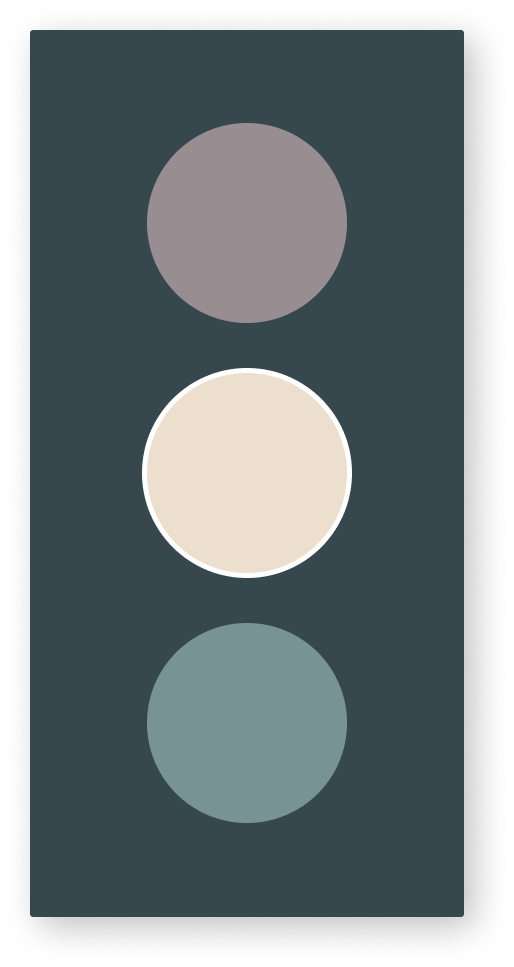
Project Hail Mary was not as “thrilling” or as dark as I expected from the cover. Giving this a yellow light. Don’t take the cover too seriously.
Final Verdict
Read if you like:
- Stories about first contact with alien life.
- Everyday people tasked with saving the world.
Skip if you dislike:
- Stories built with science. Scientific processes are explained in detail throughout.
Reading Debris
I read Project Hail Mary to fulfill the Playing Card Reading Challenge prompt: Read a science fiction book set in space.
Other prompts it would fulfill:
Read a book with a map. (Okay, it’s technically more of a diagram, but who’s checking).
Your Turn
If you had to be isolated on a spaceship for five years, with computer access to everything that has ever been written and various scientific tools for your entertainment, how many days would you last before opting into a comatose journey?
May your life be as full as your bookshelf and as long as your TBR list.
Happy Reading!

Consider life's big questions, the small ones too
“Existential Ruminations” lined, 120-page, hardcover or paperback journal.
0 Comments