

Let’s talk about the kind of book that makes you question your own reading choices.
You know the one.
It’s over 1,000 pages. It’s a classic. It’s been adapted into movies and television shows. Everyone seems to know the basic story already. And yet, somehow, you decide that what your reading life really needs is to spend a substantial portion of it reading Alexandre Dumas.
That was me with The Count of Monte Cristo.
I’d seen and enjoyed the early-2000s movie adaptation, so I already knew I liked the basic story. But liking a movie is one thing. Committing to the unabridged 1,138-page novel is another.
I was curious enough to try it, and the Playing Card Reading Challenge eventually handed me the perfect excuse.
Was it worth the time?
Absolutely.
Was every single page riveting?
Let’s not get carried away.
The real surprise was how much more there was to this famous revenge story than revenge itself. Dumas gave me intrigue, social commentary, questions about justice and vigilantism, and a main character who eventually has to confront the consequences of believing he has the right to determine other people’s fates.
Keep in mind: A book can be worth reading and still require a reading approach that works for you.
*Spoilers will be hidden and labelled so you can choose to read or skip.
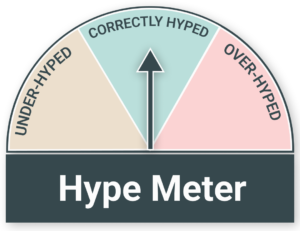
Hype Meter
Goodreads: 4.34 | StoryGraph: 4.35
My Take: Correctly Hyped
Cover Crit
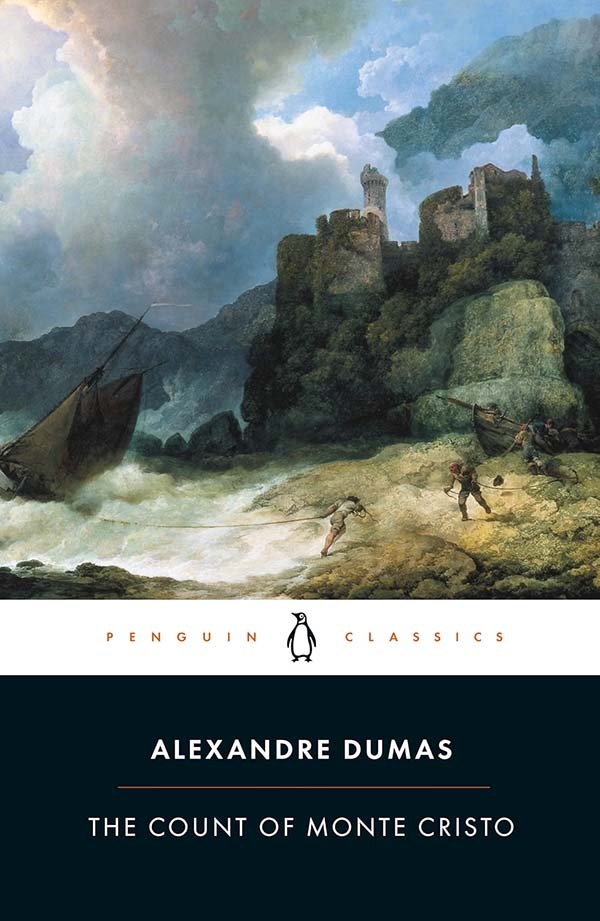
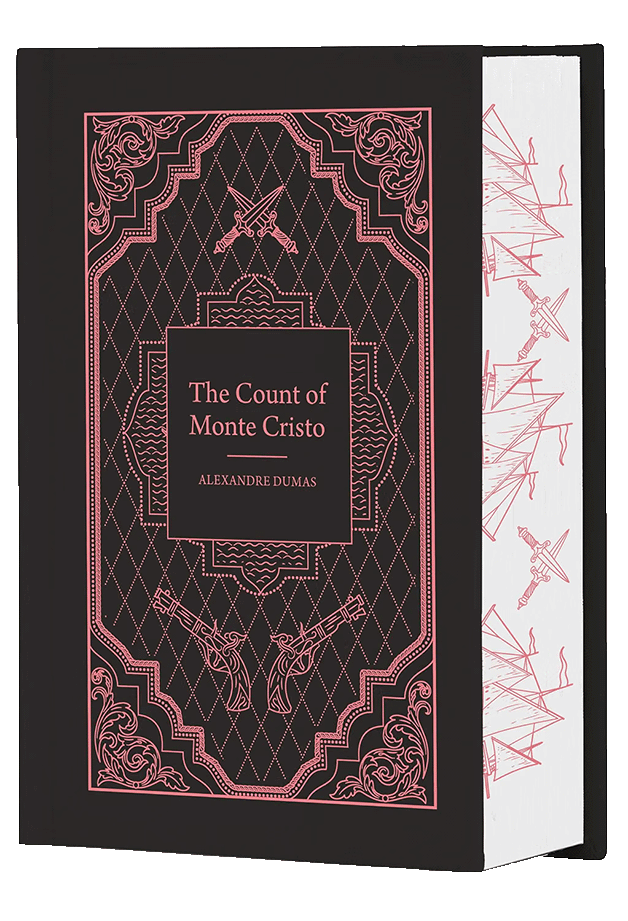
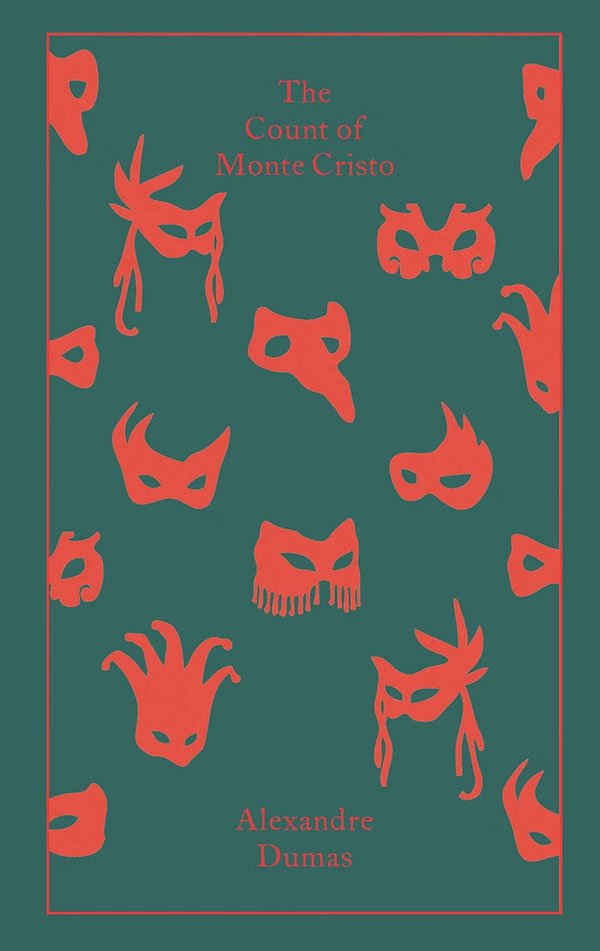
The Penguin Classics cover of The Count of Monte Cristo is exactly what you would expect for a book in the Penguin Classics series. The standard Penguin Classics paperback edition of The Count of Monte Cristo features artwork titled “Detail of Smugglers Landing in a Storm” (1780–1812) by Philippe Jacques de Loutherbourg. It will look lovely shelved with all of the other books in this line. That said, there are loads of different versions of this adventure classic, so you have ample opportunity to choose the version that best suits your shelf-style.
Color Story
Moody and dark, the artwork uses an earthy palette with lots of shadow.
Typography Notes
Clean and clear, this version of The Count of Monte Cristo adheres to the formatting assigned to the entirety of this Penguin Classics line.
Genre Signals
Mystery and adventure are equally imbued in this artwork, which makes it fitting for this story. Penguin clearly marks this as a classic, so there is no doubt as to that part.
Hidden Details
Interestingly appropriate, even though this artwork was not developed specifically for The Count of Monte Cristo. It imparts the mood, the prison, and various ship-related parts of the story.
Mood Check
Dark, mysterious, dangerous.
Beyond the Dust Jacket
The Kindle version of The Count of Monte Cristo is fully functional and has linked endnotes, making the reading experience seamless. I also like that the Kindle Paperwhite has the lookup function, which I used several times throughout the book.
Did the design affect whether I bought the book?
No, I bought the Kindle version of The Count of Monte Cristo when I found it at a deep discount, knowing that I had the intention of reading it one day. (Check the Amazon book deals section regularly for finds like this!)
Story Snapshot
In Short
A wrongly accused man escapes from prison to seek his revenge on those who condemned him.
From the Publisher
One of the grandest tales of adventure, Alexandre Dumas’s epic novel of revenge, perseverance, lost love, and self-invention—now a PBS Masterpiece miniseries starring Sam Claflin and Jeremy Irons
“My desert island book . . . No matter how many times I revisit it, I find new lines to appreciate, new narrative corners to explore.”—V. E. Schwab,
The New York Times Book Review
Thrown in prison for a crime he has not committed, Edmond Dantès is confined to the grim fortress of the Château d’If. There he learns of a great hoard of treasure hidden on the Isle of Monte Cristo and he becomes determined not only to escape, but also to use the treasure to plot the destruction of the three men responsible for his incarceration.
Robin Buss’s lively translation is complete and unabridged, and remains faithful to the style of Dumas’s original. This edition includes an introduction, chronology, explanatory notes, and suggestions for further reading.
Penguin Classics is the leading publisher of classic literature in the English-speaking world, representing a global bookshelf of the best works throughout history and across genres and disciplines. Readers trust the series to provide authoritative texts enhanced by introductions and notes by distinguished scholars and contemporary authors, as well as up-to-date translations by award-winning translators.
Before Reading:
Where did I hear about this book: Cultural Osmosis
Curiosity or Awareness: Curiosity
Would I read it if no one was talking about it? Yes!
What I want from this book: I want to have an adventure. I have seen the early 2000s movie adaptation of The Count of Monte Cristo and really enjoyed the story. I usually like the book better than the movie, and I want to see if that is the case for this classic.
Lines I Highlighted
Text
Characters I Followed Into Battle
Edmond Dantes is a complex and interesting character who transforms from a happy, competent, if simple, young man into a highly educated, ultra-rich, influential avenger who believes he acts on behalf of God, delivering both justice and reward. The end of the book sees Edmond question his right to act as he has done and to attempt to find his way back to happiness.
The remaining cast benefits from vignettes of their character to suggest that they are complex individuals, but without going into detail about their feelings and motivations more than is needed to drive the plot.
Lines I Highlighted
Text
Writing Style Notes
The setup in The Count of Monte Cristo takes a really long time, but the payoff is worth it. Dumas tells a lot of seemingly unrelated stories that feel like weird tangents in the moment, but ultimately tie back into the plot to deliver a devastating blow. Seriously, at the halfway point things pick up and start falling into place.
It is important to keep in mind that The Count of Monte Cristo was written as a serial to begin with, so there was plenty of reason to be generous with the descriptions and a bit overly verbose (Hell, he was paid by the line; you’d add some extra detail too, I bet). With that in mind, it is forgivable that there are rambling bits that drag on. But it might feel effortful for the modern reader with a short attention span.
Another interesting thing about the writing in The Count of Monte Cristo is that the writer takes an omniscient point of view and, on a couple of occasions, addresses the reader directly, asking them to remember something. The main character has no inner voice; the character’s motives and emotions must be conveyed by the storyteller. This makes actions and descriptions more important, because there is no inner monologue. The reader is left to infer much of the tone within the dialogue as well.
Lines I Highlighted
Very well, Monsieur, you have fought and won, but tomorrow we shall have our revenge.
(The premise in a line!)
Themes Living Rent-Free In My Head
- Vengeance (obviously) and vigilantism.
- What does justice look like? Who decides?
- Socio-economic inequality.
- Political impact on what is considered a crime and how justice is enacted.
- What determines a person’s happiness?
Lines I Highlighted
The king! I thought him enough of a philosopher to realize that there is no such thing as murder in politics. You know as well as I do, my dear boy, that in politics there are no people, only ideas; no feelings, only interests. In politics, you don’t kill a man; you remove an obstacle, that’s all.
(This one will keep you up at night)
What Landed For Me
What Worked:
- Intricate, layered plot with intrigue and suspense
- Social and philosophical commentary gives you plenty to mull over.
What Didn’t Fully Click:
- Women in the story were treated more like plot devices than characters
- Love wasn’t rooted in anything specific the way that other emotions seemed to be.
- Far too much time was spent placing the setting at ultra-specific real-life locations
- Felt a bit meandering at times
Overall:
Well worth the time it took to read. The more I think about it the more I like it.
Lines I Highlighted
Learning does not make one learned: there are those who have knowledge and those who have understanding. The first requires memory, the second philosophy.
Intentional Reading Reflection
When I wrote the Playing Card Reading Challenge and included the prompt to read an adventure classic, I knew that The Count of Monte Cristo would be my choice to fulfill it. It was just a matter of time, waiting for that card to emerge from the deck. Having seen and enjoyed the movie based on the book, I was curious what would be different between the book and the screen.
The timing caused me a bit of a conundrum. I was excited to read the book, but The Count of Monte Cristo is incredibly long. Having to try to read it in a week (to keep up with my reading challenge) was probably a mistake. I think I might have enjoyed it more if I had been taking my time, maybe even reading a second book alongside it. So that when it got a bit dull or meandering in parts, I could take a break and come back to it.
I didn’t love the way that women were portrayed in The Count of Monte Cristo. Admittedly, this was written in the 1840s, so I have to keep in mind that times were different. The way that women were portrayed was a bit rough for me. Generally treated as objects of desire or property, the women in the story are given a lot less page time despite having some of the most intriguing storylines and richest emotional journeys. Dumas exemplifies the distinct lack of female agency, with a couple of notable exceptions: Madame Danglars does manage to grow her own personal wealth, but has to collaborate with a man to do so. Eugenie Danglars stands singularly as the only woman in the story to be completely her own person and also (delightfully and surprisingly) an LGBTQ+ person. Alternate POVs or spin-offs showcasing the women’s perspectives would be so interesting!
At some point I think that it might be interesting to come back to it and take copious notes to look more deeply into the way that this very popular novel was both influenced by and in turn influenced popular culture. This is definitely a classic for a reason. One could clearly draw a line between The Count of Monte Cristo and loads of books and films in the mystery, thriller, and heist genres, even so far as to inform vigilantism in superhero stories.
Lines I Highlighted
Women have infallible instincts and can explain even miracles by an algebra of their own devising.
(He just called out girl-math)
Cover Promise Rating
Did the cover make promises the story actually kept?
Yes, the cover represented the story within well. I am amazed that the artwork was not developed specifically for the story.
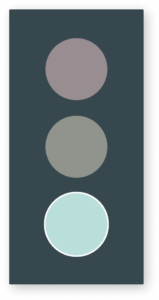
Final Verdict
Read if you like:
- Revenge stories
- “Long con” style hidden identities
- Lots of interconnected stories with tons of drama
- French History
Skip if you dislike:
- Super long books
- Diversions from the main storyline
- Large casts with complicated relationships
- Historical settings that influence the plot
Lines I Highlighted
Kind, trustful and forgiving as I was, I made myself vengeful, secretive and cruel–or, rather, impassive like fate itself, which is deaf and blind.
Reading Debris
I read The Count of Monte Cristo to fulfill the Playing Card Reading Challenge prompt: Read an adventure classic.
It could also fulfill:
- Read a classic you’ve never read.
- Read a book over 500 pages.
- Read a book about grief/loss.
- Read a translated book (French).
- Read a book with footnotes/endnotes.
Words I looked up:
- execrable – extremely bad, appalling, or utterly detestable
- league – 3 miles
- abstemious – being moderate or sparing in the consumption of food and alcohol
- nabob – wealthy, powerful, or very important person
Your Turn
Have you ever read a book that made you rethink what justice, revenge, or even happiness means? What did it make you question?
Buy This Book
May your life be as full as your bookshelf and as long as your TBR list.
Happy Reading!

A Journal for Designing Your Own Revolution
“Manifesto” lined, 120-page, paperback journal.
0 Comments