

I probably wouldn’t have picked up Rainwater on my own.
I’d never read Sandra Brown, barely knew what the book was about, and wasn’t particularly looking for a historical romance set during the Dust Bowl. But Rainwater didn’t come to me from an algorithm, a bestseller list, or a carefully curated recommendation. It arrived in my mailbox from a friend as part of an annotated book exchange.
And suddenly, I wasn’t just reading Sandra Brown’s story. I was reading the book through someone else’s eyes, too.
Set in Depression-era Texas, Rainwater is a quiet story about desperate circumstances, complicated people, and the unexpected ways people can change each other’s lives. It wasn’t a perfect read, but it introduced me to a historical setting I hadn’t encountered much in fiction and reminded me that sometimes the best books for us are the ones we wouldn’t have chosen for ourselves.
*Spoilers will be hidden and labelled so you can choose to read or skip.
This post may contain affiliate links. If you click on them and make a purchase, I may earn a small commission at no extra cost to you. As an Amazon Associate I earn from qualifying purchases.
Before Reading:
Where did I hear about this book: Friend
Curiosity or Awareness: Awareness
Would I read it if no one was talking about it? No
What I want from this book: I’m not even sure what it is about, so I hope to be pleasantly surprised by a good story with great writing since she is such a prolific author.
Hype Meter
Goodreads: 4.14 | StoryGraph: 3.85
My friend gave it 3 stars before sending it my way. I think she is right and this is over-hyped.

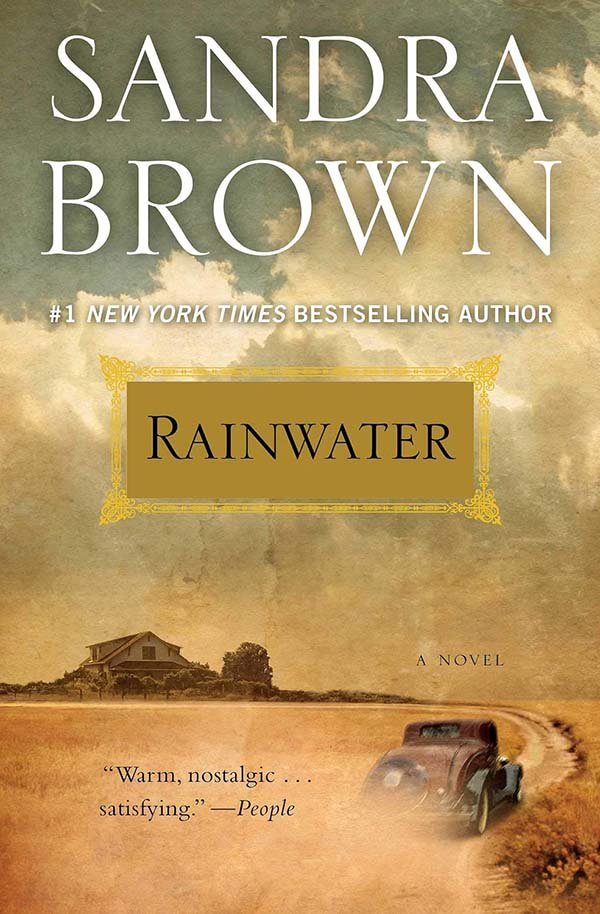
Judge Rainwater By The Cover
The cover art of Rainwater reminds me of the painting Christina’s World (1948) by Andrew Wyeth. It captures the same palette and tone. The imagery alludes to the setting, North Texas during the dustbowl.

Color Story
Muted beiges, browns and blues applied to this pastoral setting suggest heat, drought, barrenness.
Typography Notes
The typography is limited to a single word (with Sandra Brown using her standard type setting for her name, which acts as her logo or signature). The word RAINWATER is set in a serif font in all capital letters. The serifs have some gentle swashes which gives the text a slight sense of movement. The text is placed on a gold foil rectangle with intricate borders that suggest some kind of plaque.
Genre Signals
Sandra Brown’s name would suggest romantic suspense. The illustration, palette, and type suggest historical fiction.
Hidden Details
I didn’t notice any hidden details on this cover.
Mood Check
This cover makes me think of longing and desperation. I detect a hint of sadness with a touch of hope.
Beyond the Dust Jacket
Chapter headings in Rainwater are set in a similar font to the cover and are underscored with a ribbon that resembles the plaque treatment of the main cover title.
Did the design affect whether I bought the book?
I didn’t buy Rainwater; it is on loan from a friend. We are trading books as we read and annotate as a kind of asynchronous book club.
Story Snapshot
In Short
Mr Rainwater, who is terminally ill, comes to live in Mrs Barrons boarding house where they engage with desperate locals trying to survive the depression, worry over her autistic son, and also finding their way to each other.
From the Publisher
The year is 1934. With the country in the stranglehold of drought and economic depression, Ella Barron runs her Texas boardinghouse with an efficiency that ensures her life will be kept in balance. Between chores of cooking and cleaning for her residents, she cares for her ten-year-old son, Solly, a sweet but challenging child whose misunderstood behavior finds Ella on the receiving end of pity, derision, and suspicion.
When David Rainwater arrives at the house looking for lodging, he comes recommended by a trusted friend as “a man of impeccable character.” But Ella senses that admitting Mr. Rainwater will bring about unsettling changes.
However, times are hard, and in order to make ends meet, Ella’s house must remain one hundred percent occupied. So Mr. Rainwater moves into her house…and impacts her life in ways Ella could never have foreseen.
The changes are echoed by the turbulence beyond the house walls. Friends and neighbors who’ve thus far maintained a tenuous grip on their meager livelihoods now face foreclosure and financial ruin. In an effort to save their families from homelessness and hunger, farmers and cattlemen are forced to make choices that come with heartrending consequences.
The climate of desperation creates a fertile atmosphere for racial tensions and social unrest. Conrad Ellis — privileged and spoiled and Ella’s nemesis since childhood — steps into this arena of teeming hostility to exact his vengeance and demonstrate the extent of his blind hatred and unlimited cruelty. He and his gang of hoodlums come to embody the rule of law, and no one in Gilead, Texas, is safe. Particularly Ella and Solly.
In this hotbed of uncertainty, Ella finds Mr. Rainwater a calming presence. She is moved by the kindness he shows other boarders, Solly…and Ella herself. Slowly, she begins to rely on his soft-spokenness, his restraint, and the steely resolve of his convictions.
And on the hottest, most violent night of the summer, those principles will be put to the ultimate test.
From acclaimed bestselling author Sandra Brown comes a powerfully moving novel celebrating the largess and foresight of a great bygone generation. It tells a story that bears witness to a bittersweet truth: that love is worth whatever price one must pay for it.
Characters I Followed Into Battle
Ms. Ella Barron is incredibly uptight and organized. She has to be to run the boarding house and raise her son, who has autism – but autism wasn’t a known thing at this time – by herself. She is also a kind and generous person, who takes measures to help others and to be patient and empathetic.
Mr. David Rainwater is a bit mysterious, but as we come to know him we see that he is steadfast, generous, kind, and determined to do good with what remains of his life. He is incredibly likeable for a person who says very little.
Solly is Ms. Barron’s ten-year-old son. The doctor describes him as an idiot savant. He is non-verbal, and outwardly behaves in a way that would probably be fairly severe autism by todays standards. He is portayed more as a plot device and a way to understand the adult characters than as an active character.
Writing Style Notes
Rainwater could be categorized as a historical slice-of-life. There were some major plot points and overarching historical tie-ins, but for the most part it was about discovering what these characters’ daily lives looked like and getting to know them. I would say that a lot of the “getting to know them” part is subtext. The dialogue is kind of bland (I expected more from a person who had written 60 novels before this one).
Themes Living Rent-Free In My Head
Bullies. The main antagonist in Rainwater is a horrible bully whose family has a lot of money and influence but every action is intended to hurt someone who is already suffering. This person is truly detestable.
Hard circumstances bring out the best in people and the worst.
What Landed For Me
What Worked:
- The setting and the cast were realistic and reflective of the kinds of people that we know.
- The premise and setting focused on historically significant events and persons that don’t get a lot of limelight.
What Didn’t Fully Click:
- Weak dialogue
- Abrupt ending
Overall:
Rainwater is a good historical romance with a bit of an unexpected twist.
Intentional Reading Reflection
Rainwater came to me through a fun idea my friend saw on someone’s Instagram: a group of friends each pick a color and a book and read and annotate the book, then exchange it with the next person so they can read and annotate it too. This ended up being the best part about reading Rainwater.
I had never read a Sandra Brown book, nor heard of Rainwater. But when it showed up in my mailbox (this friend lives in another state), I was excited to see what she had picked. Throughout the reading experience, I felt like I was getting to see into her mind and her experience with reading the story. It was surprisingly intimate and made me feel like I had read the book right alongside her.
Rainwater was a good story, and it introduced me to characters from a historical setting that I hadn’t previously read any fiction about. While it wasn’t something that I would likely have picked for myself, it was worth the time it took to read.
I read it at the right time too, coming to the end of an overly hot and humid North Texas summer. I felt like I could deeply relate to the setting.
Cover Promise Rating
Did the cover make promises the story actually kept?
Yes! The cover of Rainwater aptly sets up the tone and setting of story within.

Final Verdict
Read if you like:
- Depression-era stories, interest in the Dust Bowl
- Quiet stories that highlight the life of someone considered “different”
Skip if you dislike:
- Slow-paced, slice-of-life stories.
- Dialogue with little character
Lines I Highlighted
Even knowing the ending was sad, I wouldn’t have deprived myself the beauty of the story. Would you?
Reading Debris
Are pickled watermelon rinds a thing, or was that just Depression-era conservatism? What does it taste like?
Your Turn
Have you ever done an asynchronous or traveling book club? How did you like it?
Buy This Book
May your life be as full as your bookshelf and as long as your TBR list.
Happy Reading!

Go on, count your chickens before they hatch.
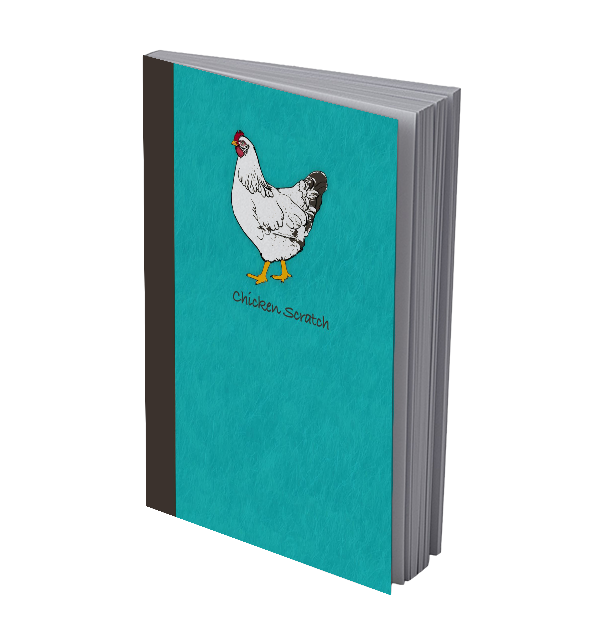
“Chicken Scratch” lined, 120-page, paperback journal.



0 Comments