

I found Confessions of a Pagan Nun in a book sale email, downloaded it almost entirely because of that wonderfully contradictory title and an intriguing cover, and then promptly let it languish on my Kindle for far too long. I had no particular reason to think it would become a favorite. In fact, when I finally started reading it, I wasn’t even sure I was going to finish it.
And then, somewhere around 20%, something clicked.
What I expected to be an obscure historical fiction curiosity turned into a thoughtful, surprisingly funny exploration of literacy, religious conversion, women’s autonomy, and the stories we inherit about the past.
Sometimes the books we choose almost by accident have the most interesting things to tell us about ourselves.
*Spoilers will be hidden and labelled so you can choose to read or skip.
This post may contain affiliate links. If you click on them and make a purchase, I may earn a small commission at no extra cost to you. As an Amazon Associate I earn from qualifying purchases.
Hype Meter
Goodreads: 3.91 | StoryGraph: 3.8
My Take: Correctly-Hyped. Under-known.
Cover Crit
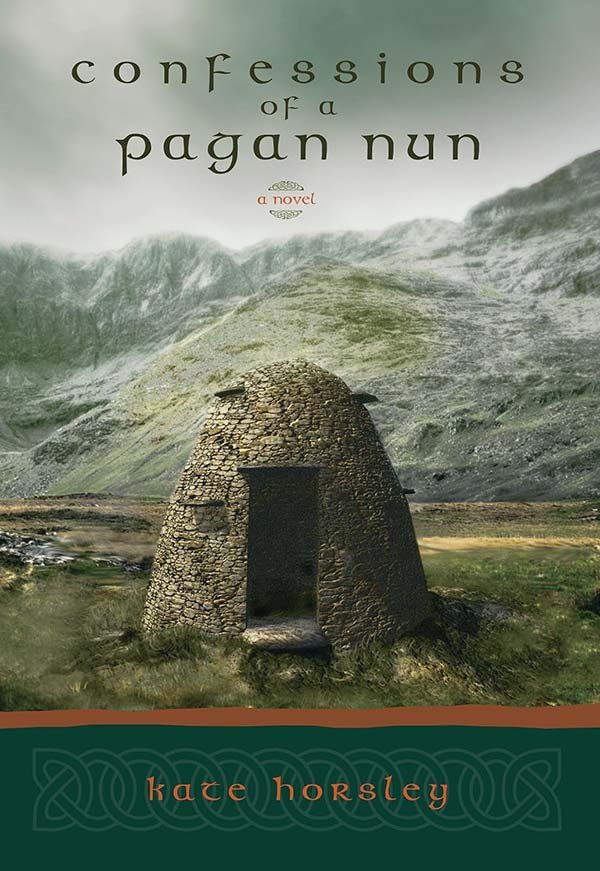
The cover of Confessions of a Pagan Nun caught my eye because of the oddly shaped hut. It kept my attention with the seemingly paradoxical title. How could a pagan be a nun? A brief review of the description had me downloading this book.
Color Story
The earth-tone palette is invitingly pastoral. It is highly representative of the setting for the book–a monastery/abbey in medieval Ireland.
At the bottom of the cover composition, the author’s name is set in a rust orange against a forest green that are too close in tone and causes the name to be difficult to read. This is further muddied by the Celtic knot effect that complicates the composition and makes the whole area hard to look at.
Typography Notes
The title and author name further set the tone by being typeset in a font that is often used for Celtic or medieval northern European communications. The text is all lower case, which is an interesting choice. I am guessing that it probably reflects medieval writing which didn’t distinguish between capital and lower case letters. The letter spacing is exceptionally wide. In this font, it makes the typography look somewhat amateur and reduced readability.
Genre Signals
The Celtic knot behind the author’s name is yet another indicator of place-making. The composition as a whole skews historical.
Hidden Details
The imagery on the cover of Confessions of a Pagan Nun are very straight-forward. There is no need to hide details.
Mood Check
The single hut set in front of larger hills and mountains that have a bit of fog seems isolated. It gives the cover a feeling of loneliness and solitude.
Beyond the Dust Jacket
The ebook of Confessions of a Pagan Nun is generally well-formatted. It is simple with no frills. There are a few instances throughout the book in which two words are run together, missing spaces. This isn’t a huge problem, but the book would benefit from an update fixing these errors.
Did the design affect whether I bought the book?
I think in this case it did. The imagery grabbed me, the title hooked me, the description made me press “buy.”
Story Snapshot
In Short
Gwynneve longs to read and write, leading her to apprentice with a Druid and later to live as a Christian nun to transcribe teachings and to tell her story.
From the Publisher
A druid-turned-nun writes of faith, love, and loss in this “beautifully written and thought-provoking book” set at the dawn of Ireland’s Christian era (Library Journal)
Cloistered in a stone cell at the monastery of Saint Brigit, a sixth-century Irish nun secretly records the memories of her Pagan youth, interrupting her assigned task of transcribing Augustine and Patrick. She revisits her past, piece by piece—her fiercely independent mother, whose skill with healing plants and inner strength she inherited; her druid teacher, the brusque and magnetic Giannon, who introduced her to the mysteries of the written language.
But disturbing events at the cloister keep intervening. As the monastery is rent by vague and fantastic accusations, Gwynneve’s words become the one force that can save her from annihilation.
“As a slant of sunlight illuminates jewels long buried, Kate Horsley’s novel brings words to an ancient silence and a living, vivid presence to people who lived in that time of great changes and estrangements we call the Dark Ages.” —Ursula K. Le Guin
Lines I Highlighted
For if one does not have knowledge of what to do or think, he will be told by another what to do or think.
Characters I Followed Into Battle
Confessions of a Pagan Nun is a memoir type of story about a character named Gwynneve who was a Pagan girl in Ireland during the sixth century when Christianity was being brought into the tribes of the region. She longed to learn to read and write…a powerful “magic” held by the Druids. Her determination to be literate is the catalyst behind her whole story. She is smart and insightful, witty, and fierce.
Lines I Highlighted
The power of words seemed worthy of complete faith and did not betray or trick me. I was sure of their strength and value as I could be sure of nothing else.
Writing Style Notes
There is a “Translator’s Note” at the beginning of the book that indicates Gwynneve was a real person who lived fifty-ish years after Saint Patrick and wrote some version of this text in Gaelic. In this case, it is a memoir, though designated “a novel.”
Gwynneve writes in first person as a middle aged woman who is looking back on her life and recording the people she has known and places she has been in first person. This is injected with instructive insights and some degree of satire. The humor is incredibly subtle, but a sense of mirth is evident at times.
Lines I Highlighted
Knowledge often spoils devotion.
Themes Living Rent-Free In My Head
The power of literacy is so much greater than it is given credit for.
How acceptance of a new religion was basically bartered for (with agricultural and technical advancements) and forced (through removal of opponents) on a vulnerable people who were just trying to survive the best they could–but were not looking for a savior.
The rise of patriarchy coincides with (and may have been partially caused by) the rise of Christianity.
Lines I Highlighted
I said that men fear affection because it is stronger than power and one must only have brute force to wield power but must have strength deeper than flesh to wield affection.
What Landed For Me
What Worked:
- Insightful point of view that is not widely explored
- Smart and witty without being over the top
- Representation of an early “bookish” person
What Didn’t Fully Click:
- This is titled “a novel” but the preamble describes translating memoirs. I felt rather unsure how much to take as storytelling and how much would have been the original writer’s voice. I wish it had been clearer.
Overall:
An unexpected treat. I was shocked by how much I actually enjoyed Confessions of a Pagan Nun.
Lines I Highlighted
I would live in a world fill of Christ-like humans, but not one full of Christians, may God forgive me.
Intentional Reading Reflection
I can say without hesitation that this was a curiosity purchase. I have never seen Confessions of a Pagan Nun on Bookstagram or Pinterest, etc. It came to my attention in one of the many book sale email lists I susbscribe to. (Who doesn’t love a good deal, am I right??) As I mentioned earlier in this post, I was caught by the illustration and the title. So I downloaded it. But then it languished in my TBR. It never seemed like the right time. Something more exciting or of the moment came along. But with my current reading challenge prompt, I knew the time had come to finally explore the world of Medieval Ireland.
I was unsure, at first, whether I was going to get pulled into the story, or if I should consider a DNF. But by about 20% I was hooked. I got invested in Gwenneve’s story and the relationship that is has to how religion is perceived today. It is such a joy to discover a book that excedes your expectations.
Confessions of a Pagan Nun is insightful and thought provoking. It challenges readers to take a look at what they think they know about how the Christian religion was spread and what that might have looked likes from the position of the “converted” souls.
Lines I Highlighted
Use words to please, to instruct, to soothe. Then stop speaking.
Cover Promise Rating
Did the cover make promises the story actually kept?
Yes, the cover is an accurate representation of the book. It is rather literal with regard to the setting, but the atmosphere of loneliness that the cover projects is actually rather pervasive within the story iteself.

Final Verdict
Read if you like:
- Under-represented historical points of view.
- Strong, opinionated women quietly rebelling in small ways
Skip if you dislike:
- Slice-of-life style storytelling.
- Books that challenge religious belief systems
Lines I Highlighted
I learned that I cannot wait to love what is in my presence, for it or I may well be gone tomorrow.
Reading Debris
I read Confessions of a Pagan Nun to fulfill the Playing Card Reading Challenge prompt: Read the oldest book on your TBR. While this was not the earliest published book overall, I chose it because I didn’t want to read a classic nor start a series. It had been on my Kindle for a very long time and was among the earliest published that met the criteria.
Your Turn
What book have you bought that was the most outside of your generally preferred genre? Why did you pick it?
May your life be as full as your bookshelf and as long as your TBR list.
Happy Reading!

Plans, Goals, Million-Dollar Ideas...
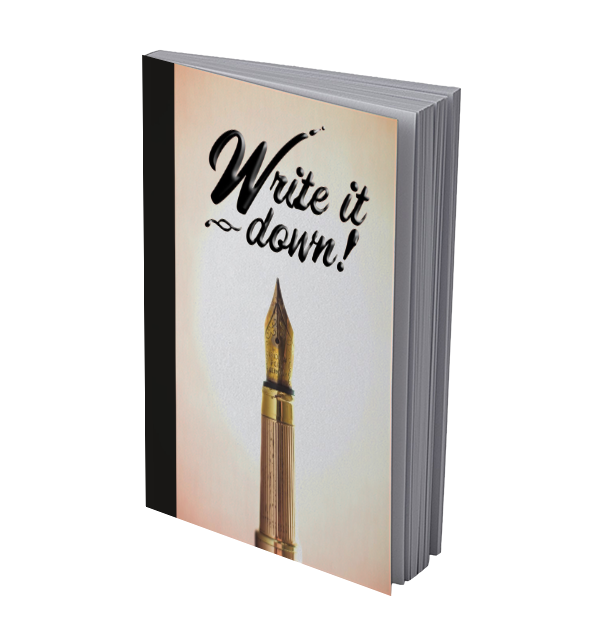
“Write It Down” lined, 120-page, paperback journal.


0 Comments