

There’s a specific kind of book that lives in a strange space. You don’t like the characters. You don’t feel particularly “happy” reading it. And yet… you keep turning the pages. The Secret History is firmly in that category. A story that pulls you in not because it’s pleasant, but because it’s precise in its unraveling of people who believe—fully—that they are justified.
Hype Report
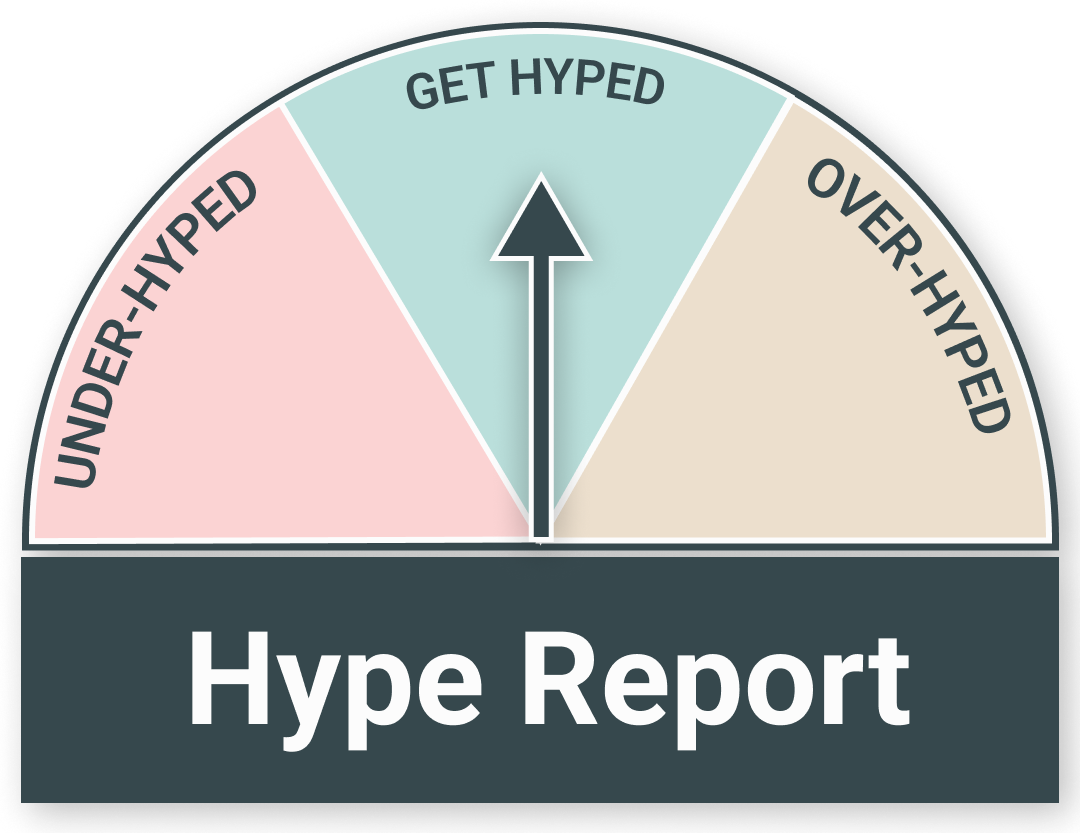
Goodreads: 4.15 | Storygraph: 4.18
My Take: Appropriately-Hyped
Aesthetic
The Cover
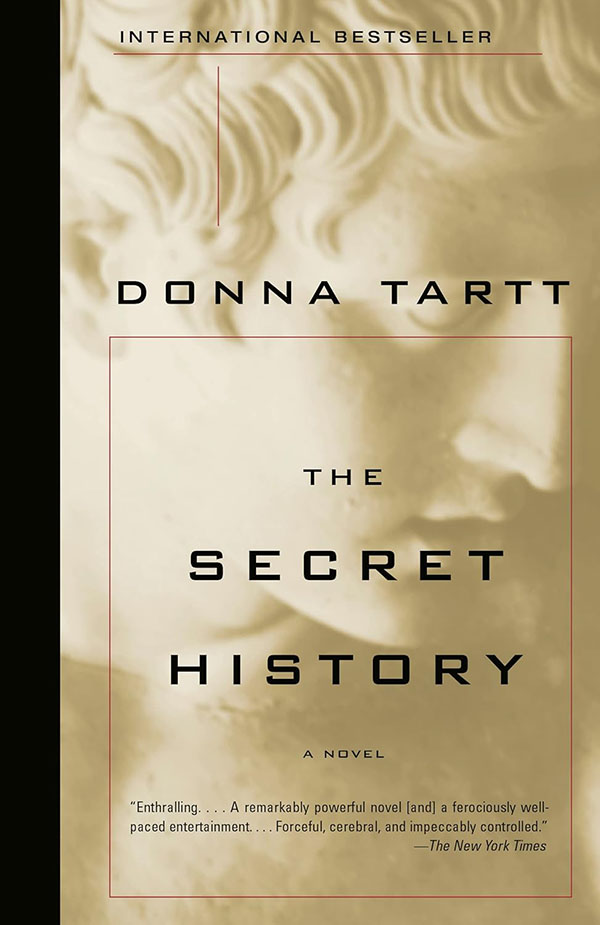
The cover of The Secret History looks very much like a textbook. Close-up image of a (presumably Greek) statue framed in with color blocks. Simple, clear sans-serif type widely spaced announces the title. Thin redline adornments hint at something more.
Interior
The Secret History is a long-ish book. Nearly 600 pages and only 8 chapters. So be advised, it’s not typical in that regard. The ebook was free of errors and formatted well.
Did the design affect whether I bought the book?
No. Bookstagram made me read it. I wouldn’t have given this cover a second glance.
Summary
In Short
A group of clever, eccentric misfits at a New England college discover a way of thought and life a world away from their banal contemporaries, but their search for the transcendent leads them down a dangerous path.
From the Publisher
ONE OF TIME MAGAZINE’S 100 BEST MYSTERY AND THRILLER BOOKS OF ALL TIME • INTERNATIONAL BESTSELLER • A contemporary literary classic and “an accomplished psychological thriller … absolutely chilling” (Village Voice), from the Pulitzer Prize–winning author of The Goldfinch.
One of The Atlantic’s Great American Novels of the Past 100 Years
Under the influence of a charismatic classics professor, a group of clever, eccentric misfits at a New England college discover a way of thought and life a world away from their banal contemporaries. But their search for the transcendent leads them down a dangerous path, beyond human constructs of morality.
“A remarkably powerful novel [and] a ferociously well-paced entertainment . . . Forceful, cerebral, and impeccably controlled.” —The New York Times
“On leaving home I was able to fabricate a new and far more satisfying history, full of striking, simplistic environmental influences; a colorful past, easily accessible to strangers.”
Character Analysis
Richard, the POV character in The Secret History, is a college student who lacks empathy, has no regard for others, acts impulsively, and lies fluently for no reason (ahem, psychopath). His obsession with a small group of students and their teacher, who study Greek (Classics), drives him to insinuate himself into their group. He is not the least likable of the characters.
The small band of “friends” is each unlikable in their own way. Yet the force of Richard’s compelling point of view (however skewed it may be) drags the reader along. The group evolves from an elite, special, idealized student group into borderline caricatures of the worst types of people, but by then it’s too late – you’re invested.
“It was as if the characters in a favorite painting, absorbed in their own concerns, had looked up out of the canvas and spoken to me.”
Writing Style
The writing is intentionally pretentious and elitist. This high-brow, affected style showcases the importance of appearance to the main characters. They romanticize the ugliness of their lives through language, and at the same time use it to separate themselves from other people.
As the story is told through Richard’s point of view, you can see how desperately he wants to be a part of this group and adopts their affectations. However, he does communicate with other groups in a different way when it serves his needs.
“If there’s one thing I’m good at, it’s lying on my feet. It’s sort of a gift I have.”
Themes
The Secret History examines class, money and privilege. Pokes holes in the glossy veneer of higher education systems.
Substance abuse runs rampant through the pages. Mental health ignored to the extreme.
Murder. I’d say more, but it’s better to go in blind.
“For if the modern mind is whimsical and discursive, the classical mind is narrow, unhesitating, relentless.”
Critical Evaluation
The main point of The Secret History seems to be that anything can be rationalized if looked at from a specific point of view. Everyone sees themselves as the hero in their own story. In this effort, Tartt succeeds. The reader can see how the characters believe that what they choose to do is either the right choice or their only option. When looking at the situation from a distance, clearly, there would be other avenues with different outcomes.
Tartt expertly weaves information into the narrative to offer alternatives- little factoids that show how untethered the characters become from reality.
“Death is the mother of beauty,” said Henry. “And what is beauty?” “Terror.” “Well said,” said Julian. “Beauty is rarely soft or consolatory. Quite the contrary. Genuine beauty is always quite alarming.”
Personal Opinion
I picked up The Secret History because I’d seen so many people praising it on social media. Honestly, I didn’t even really know what it was supposed to be about. Right from the prologue, I realized that I had no idea what I was in for. So…did I like it? I can’t say. It wasn’t fun to read, but I was invested in the story. I didn’t like the characters, but I can’t stop thinking about them – looking for redeeming qualities. It was well-written and impactful.
“I suppose it would be interesting to say that at this point I felt torn in some way, grappled with the moral implications of each of the courses available to me. But I don’t recall experiencing anything of the sort.”
Recommendation
If you have any issues with extremely long chapters, then The Secret History is not the book for you.
If you need a happy ending, The Secret History is not the book for you.
If you are easily triggered – check the warnings.
If you like dark academia, challenging characters, moral ambiguity, and chaotic excess, then please hurry to add The Secret History to your TBR.
The Secret History pairs well with a stiff drink (scotch neat, or a dry martini) and obscure classical music.
Notes
I read The Secret History to fulfill the Playing Card Reading Challenge prompt: read a book with an unreliable narrator. While our narrator doesn’t seem to be deliberately trying to deceive the reader, he is actively deceiving himself and other characters.
Let’s talk about books that you think are “good” without necessarily being likable.
Buy This Book
May your life be as full as your bookshelf and as long as your TBR list.
Happy Reading!

Write it down. Get it out. Feel better.
“Things I Worry About” lined, 120-page, paperback journal.
0 Comments