

Feminism, Friendship & Finding Yourself
On paper, Margaret Ryan has everything she’s supposed to want. A husband, children, a beautiful home, and a neighborhood built on appearances. But The Book Club for Troublesome Women asks the uncomfortable question so many women of that era weren’t allowed to voice: what if the dream you were sold doesn’t quite fit? Through one clandestine book club, this novel explores how reading, conversation, and connection can crack even the most polished veneer.
Hype Report
Goodreads readers’ average rating is 4.10 stars. Appropriately-hyped!
Aesthetic
The Cover
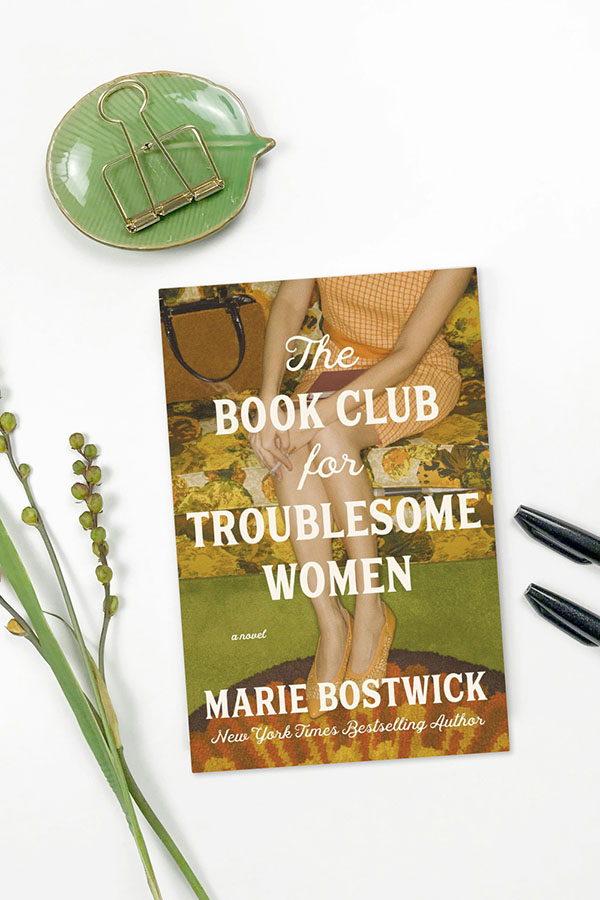
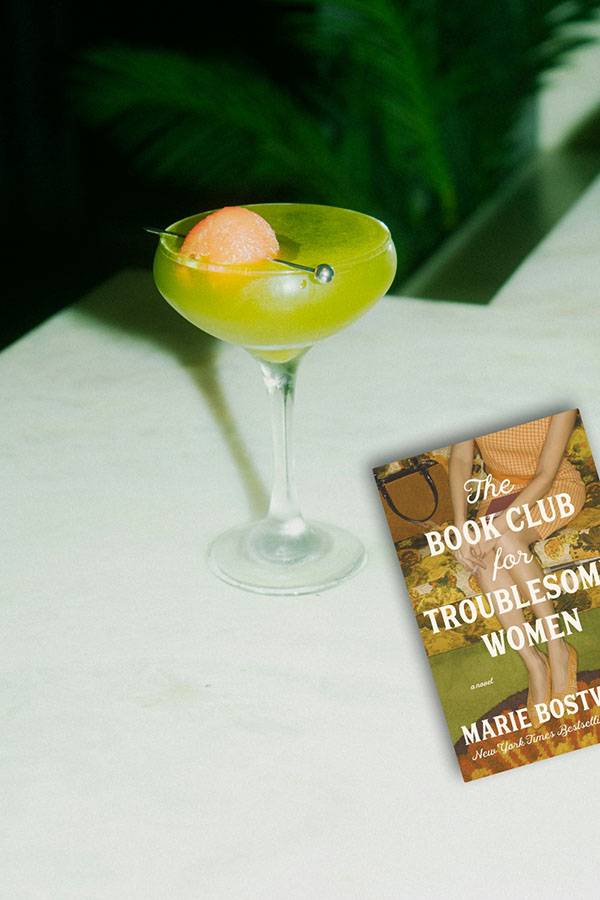
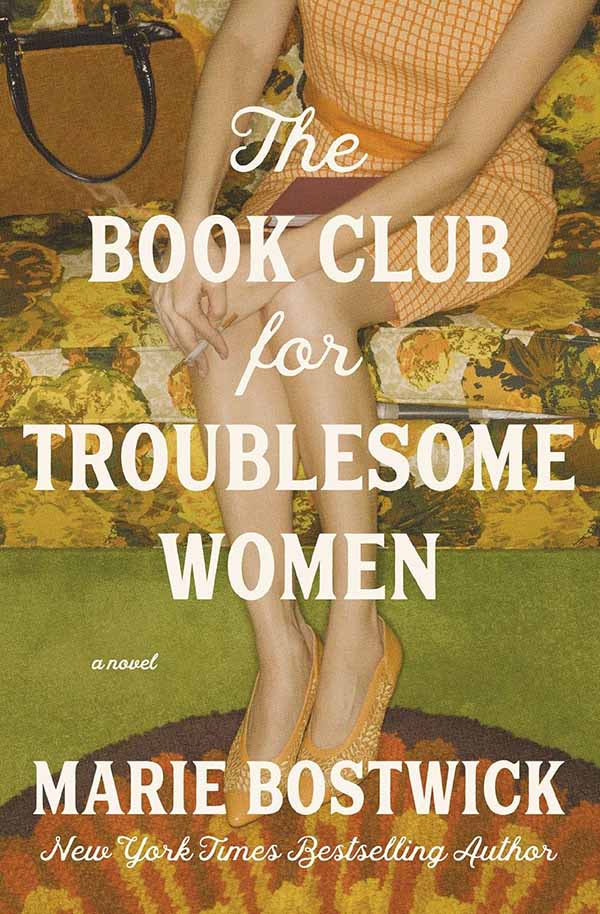
The Book Club for Troublesome Women’s cover clearly evokes the time period in which the story is set. The imagery and palette work together to establish some nostalgia or to trigger preconceived ideas about the 1960s in America. Cropping this to remove the face of the subject helps to anonymize the individual and create an environment to invite the reader into the setting and imagine themself there.
The title and author name are of approximately equal weight. While not strictly a design no-no, I don’t care for the intermixing of the fonts within the title. I have spent some time looking at it to see if I could imagine why this design decision was made, and I just couldn’t. It draws unnecessary attention to the words “the” and “for” which makes absolutely no sense. In my humble opinion, it would have looked better to use the same typeface for the whole title, perhaps reducing the type sizing on those two words by a point or two to deemphasize them. On the other hand, I do like the script treatment of “New York Times Bestselling Author.” I think this sets it apart as something separate, deserving of highlighting.
The spine is lovely, despite the multi-font title. The layout is readable from the shelf, and the zoomed-in image of the shoes at the top hints at the cover to spark memory.
Interior
Clearly delineated chapters with endearing chapter titles move readers through the book. Lovely drop caps adorn the first line of each chapter. Inter-chapter scene breaks are noted with a triple asterisk. Type size is very readable, though the margins are a touch narrow for annotations.
Includes both a heartfelt letter to readers and a set of discussion questions to pose to your own book club.
Did the design affect whether I bought the book?
I received The Book Club for Troublesome Women as a gift from a family member, so the cover did not affect whether I bought the book. If I were to guess, I don’t imagine this one would have caught my eye, mostly because it does such a good job of setting up expectations of the time period and setting. I wouldn’t have picked this for myself, but I am very grateful that someone else did.
Summary
In Short
Suburban housewives in 1960s Virginia form a secret book club that sparks feminist awakenings and lasting friendships.
From the Publisher
By 1960s standards, Margaret Ryan is living the American woman’s dream. She has a husband, three children, a station wagon, and a home in Concordia–one of Northern Virginia’s most exclusive and picturesque suburbs. She has a standing invitation to the neighborhood coffee klatch, and now, thanks to her husband, a new subscription to A Woman’s Place–a magazine that tells housewives like Margaret exactly who to be and what to buy. On paper, she has it all. So why doesn’t that feel like enough?
Margaret is thrown for a loop when she first meets Charlotte Gustafson, Concordia’s newest and most intriguing resident. As an excuse to be in the mysterious Charlotte’s orbit, Margaret concocts a book club get-together and invites two other neighborhood women–Bitsy and Viv–to the inaugural meeting. As the women share secrets, cocktails, and their honest reactions to the controversial bestseller The Feminine Mystique, they begin to discover that the American dream they’d been sold isn’t all roses and sunshine–and that their secret longing for more is something they share. Nicknaming themselves the Bettys, after Betty Friedan, these four friends have no idea their impromptu club and the books they read together will become the glue that helps them hold fast through tears, triumphs, angst, and arguments–and what will prove to be the most consequential and freeing year of their lives.
The Book Club for Troublesome Women is a humorous, thought provoking, and nostalgic romp through one pivotal and tumultuous American year–as well as an ode to self-discovery, persistence, and the power of sisterhood.
“Margaret liked that her daughter knew her own mind and wasn’t afraid to speak it. It was an underappreciated quality in women, one that often faded with age.”
Character Analysis
The group of women who form the book club in The Book Club for Troublesome Women are each very different from one another in personality, interests, points of view, and in some cases, age and economic situations. They are not racially or culturally diverse, but as they all live in an overly planned community that strives for homogeneity, this is expected. They aren’t previous friends (mostly) nor are they insta-bffs. These women challenge each other. That’s sort of the point. Each character has their own struggles and their own responses to those struggles. They seem very thought-through and realistic in their responses to events. Each experiences their own arc that layers and overlaps in ways that make the story engaging and believable. Even the side characters had weight and form. Delightful.
It’s lovely to see an example of mutual respect and growth together in the side character example of the couple that owns the bookstore.
“Examining thoughts and ideas that can impact your life is the whole point of reading…”
Writing Style
The Book Club for Troublesome Women is engaging. Bostwick draws you in with her approachable language and hooks you with flawed but sympathetic characters. Writing that tugs at the heartstrings just as easily as it inflames you with a sense of injustice.
“She’s come to think of the bookstore as its own sort of book club, a place to share conversation and companionship with people who were curious about the kinds of things she was curious about, an island of ideas amid a sea of conformity.”
Themes
Topics such as Friendship, Finding a sense of purpose, Equality, Marriage, Gender Roles, Privilege, Civil Rights and Generational Change find footing in the narrative of The Book Club For Troublesome Women.
Interestingly, each of the women wanted something more in their lives, something truly their own, and was being held back by their husbands (and gender role expectations). The funny thing is that the thing each woman wanted to pursue was the thing that originally attracted their husband in the first place – their passion, their skill, their unique personhood. This is explored in depth in the Margaret and Walt storyline.
“You can have it all, just not all at the same time.”
Critical Evaluation
The Book Club for Troublesome Women showcases how hard-won many basic freedoms women today take for granted were. While the characters are undoubtedly coming from a place of privilege, the writing suggests that even as they struggle with their own desire for freedom, they are not unaware that others struggle too. It is casually pointed out that women’s rights evolved alongside other civil rights. Not to mention the fact that Margaret seems to understand that feminism helps men, too.
“Books sprung from an author’s imagination can be just as meaningful as those based on facts, figures, and events, or even more meaningful.”
Personal Opinion
The Book Club for Troublesome Women took me on a roller coaster of feelings! I was engaged. I was invested in the outcomes. I was not disappointed.
“Starting is the hardest part.”
Recommendation
Readers interested in modern historical fiction, the 1960s specifically – The Book Club for Troublesome Women is meant for you.
Readers interested in an emotional vignette of this turning point in the history of women’s rights in America and how it looked to privileged, white, suburban housewives- The Book Club for Troublesome Women is your jam.
Readers looking for a story about unlikely friendships and women (families) seeking to find purpose and find a path that fits them – yes, The Book Club for Troublesome Women is for you.
Notes
A list of books mentioned within The Book Club For Troublesome Women:
- The Feminine Mystique by Betty Freidan
- The Vindication of the Rights of Women by Mary Wollstonecraft
- The Second Sex by Simone de Beauvoir
- A Room of One’s Own by Virginia Woolf
- Gift From The Sea
- The Group by Mary McCarthy
- Herland by Charlotte Perkins Gilman
- A Town Like Alice by Nevil Shute
- Babbitt by Sinclair Lewis
- Revolutionary Road by Richard Yates
- Dearly Beloved by Anne Morrow Lindbergh
- The Old Man and the Sea by Ernest Hemingway
- Ice Station Zebra by Alistair MacLean
- Joy in the Morning by Betty Smith
- The Girls of Slender Means by Muriel Spark
- The Bell Jar by Sylvia Plath
Recommendations for additional reading, playlists and more available on Marie Bostwick’s Website.
Does your bookclub read controversial books?
Buy This Book
May your life be as full as your bookshelf and as long as your TBR list.
Happy Reading!

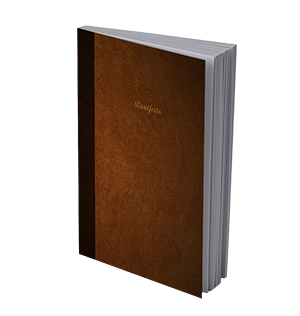
Write Your Own Rebellion.
“Manifesto” lined, 120-page, paperback journal.


0 Comments